
Miami Beach Probate Attorneys
Miami Beach, FL Probate Process for Residents & Non-Residents
Losing a parent is hard enough without a court file to open. If your mother or father died in Miami Beach and left a condo, a bank account, or a policy with no named beneficiary, you likely need a Miami Beach probate attorney to open the estate and move title legally. Florida Probate Law Firm, PLLC, handles one thing, and that is probate.
We open formal administration, summary administration, and disposition without administration for families throughout Miami-Dade County, and we run the process almost entirely online. Most of our clients live elsewhere and stay elsewhere while we work. Call us at (954) 710-5500 for a free consultation and speak with one of our attorneys about what your family’s estate actually needs.
What Does a Miami Beach Probate Attorney Actually Do?
A Miami Beach probate attorney opens the estate with the court, gets a personal representative appointed, and handles the filings that allow property to be transferred to the heirs. Florida law calls that person the personal representative, not the executor, and the court has to appoint them before they can sign anything on behalf of the estate.
Day to day, the work looks like this:
- Filing the petition for administration and depositing the original will with the clerk
- Getting Letters of Administration issued so the personal representative has legal authority
- Publishing and serving the notice to creditors, then reviewing any claims that come in
- Preparing the inventory of estate assets and any required accountings
- Clearing liens, association balances, and outstanding bills against estate property
- Distributing what remains and petitioning to close the estate
You do not have to know which of these your estate requires. That is what the first phone call is for.
Which Kind of Florida Probate Will Your Estate Need?
Most Miami Beach estates are handled under one of three procedures: formal administration, summary administration, or disposition without administration. Which one applies turns on the size of the estate, how long ago the death occurred, and what kind of assets are involved.
- Formal administration. The standard court-supervised process under Chapter 733 of the Florida Statutes. A personal representative is appointed, creditors are notified, and the court oversees the estate from opening to discharge.
- Summary administration. A shorter path under Chapter 735, available when the qualifying estate value falls under the statutory threshold or the death occurred more than two years ago. No personal representative is appointed.
- Disposition without administration. A narrow option, also in Chapter 735, for very small estates where someone paid funeral costs or final medical bills and is asking to be reimbursed.
Picking the wrong track costs families months. We review the asset list first and tell you which one fits before anything is filed.
Filing Probate in Miami-Dade County
Miami Beach estates are filed in Miami-Dade County, which means the probate division of the Eleventh Judicial Circuit in downtown Miami. It is one of the busiest probate dockets in the state, and it follows a local procedure that differs from those in Broward or Palm Beach.
Two local points matter early. The original will has to be deposited with the Miami-Dade Clerk of the Court within 10 days of learning of the death, even if no one has decided yet whether to open probate. And nearly everything else is filed electronically through the state portal, so the family rarely needs to appear in person.
Because our work spans the whole county, we bring the same process to Miami Beach that we use for our Miami-Dade County probate services generally, including the mainland cities just across the causeways.

Do Heirs Have to Travel to Miami Beach?
No. Heirs and personal representatives who live outside Florida almost never need to set foot in Miami Beach for a routine estate. Florida does not require the personal representative to live in the state if they are a close relative, and the paperwork can be signed digitally from anywhere.
This is a large part of what we built the firm around. Documents go out for electronic signature, consultations happen by video or phone, and account statements and deeds come to us rather than to a mailbox someone has to visit. Families in New York, Toronto, Buenos Aires, and Tel Aviv close Miami Beach estates with us without booking a flight.
When the person who died lived somewhere else but owned property here, that is a different filing, and we handle ancillary probate for out-of-state and international heirs as a regular part of the practice.
Condominiums, Homestead, and Miami Beach Property
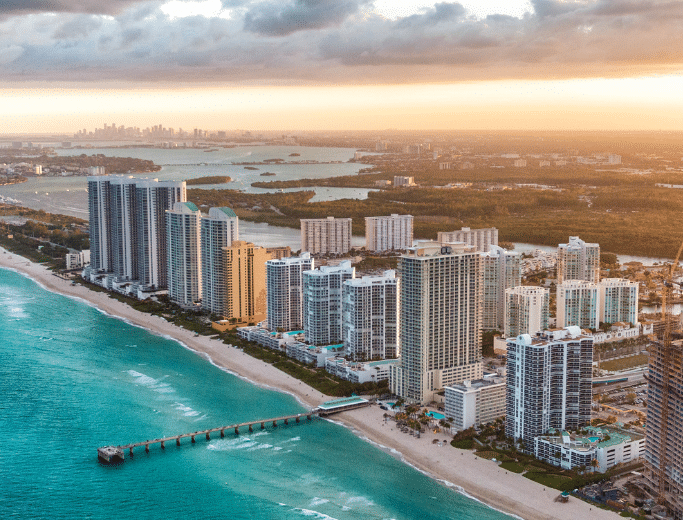
Miami Beach estates are property estates. More often than not, the single largest asset is a condominium unit in South Beach, Mid-Beach, or one of the North Beach towers, and the questions that follow are about that unit rather than about cash.
A few issues come up again and again here:
- Association dues and assessments keep accruing after death, and the association will look to the unit
- Structural and reserve assessments on older oceanfront buildings can be substantial
- Homestead property receives special treatment under Chapter 732 and generally passes outside the reach of most creditors
- A surviving spouse may have elective share rights even if the will says otherwise
- Seasonal units that were never homesteaded are treated as ordinary estate assets
Sorting out which category the unit falls into shapes the entire case, so we ask about it on the first call. Families weighing a sale in nearby Miami face many of the same association questions.
How Long Does Probate Take in Miami Beach?
A straightforward formal administration in Miami-Dade County typically runs between six months and a year, while a summary administration can be completed in a matter of weeks once it is filed. The floor for formal administration is set by the three-month creditor claim period, which cannot be shortened.
What stretches a case out is usually predictable: a missing original will, an heir nobody can locate, a property that needs repairs before it can sell, or a creditor claim that has to be objected to. Estates with assets in another country take longer because foreign documents need certification.
Estates that stay on schedule tend to share one trait: someone gathered documents early. The families who finish fastest are the ones who ordered death certificates, located the original will, and pulled account statements in the first few weeks rather than waiting to be asked.
We would rather tell you a realistic range at the start than a comfortable one. The Florida Courts system publishes its own timelines, and we will explain where your estate is likely to fall within them.
What to Do in the First Two Weeks After a Death
The first two weeks set up everything that follows, and most of it is gathering rather than deciding. You do not need to know what kind of probate applies before you start collecting.
Order more certified copies of the death certificate than you think you need. Banks, insurers, transfer agents, and the condominium association will each want one, and ordering a second batch later costs time. Six to 10 copies is a reasonable starting point for an estate with a property and several accounts.
Then work through the practical list:
- Locate the original will, not a photocopy, and deposit it with the clerk
- Secure the unit, change the locks if others have keys, and confirm the insurance is still in force
- Notify the association in writing so notices come to someone who will read them
- Redirect mail, which is often how forgotten accounts and unpaid bills surface
- Collect recent statements for every account you can identify
- Stop automatic payments that no longer make sense, while keeping insurance and association dues current
Hold off on distributing anything, including personal items promised informally, until the estate is open. Property given away early sometimes has to be recovered, which is an unpleasant conversation with a sibling. If you are unsure whether something counts as an estate asset, set it aside and ask.
Vacant condominium units deserve particular attention in Miami Beach. An unoccupied unit with a lapsed policy, a failed air conditioner, or a slow leak can generate damage and association claims that consume a meaningful share of what the family would otherwise inherit. A neighbor or building manager willing to check on the unit is worth arranging early.
Why Miami Beach Families Choose Florida Probate Law Firm
Probate is all we do. We are not a general practice that takes estates between other matters, and that focus shows up in how quickly a file moves and how few surprises land on you.
- You talk to a probate attorney. Our intake team tries to put you on the phone with one of our attorneys during your first call, not a week later.
- Two attorneys, both involved. Thomas R. Walser, Esq. and Michael Bracchi, Esq. lead the firm’s probate work, and clients deal with our attorneys directly rather than through layers of staff.
- Billing you can follow. We bill hourly and explain how that works before you hire us, so your fee is tied to the work the estate requires rather than to a percentage of what your parent left behind.
- Built for remote families. Digital signing, virtual consultations, and online document delivery are the default here, not an accommodation.
- Statewide reach. We serve all 67 Florida counties from our Boca Raton and Fort Lauderdale offices.
Consultations are free, and you will leave the call knowing which type of administration your estate needs. Call us and we will tell you what the next step looks like.
FAQs Answered by Our Miami Beach Probate Attorneys
Property properly titled in a trust generally passes outside probate. The complication we see in Miami Beach is a trust that was created but never funded, meaning the deed was never changed. In that situation, the unit is still an estate asset and probate is usually required.
Florida probate reaches Florida property. Assets held abroad are governed by the law where they sit, and a separate proceeding there is often necessary. We coordinate the Florida side and work alongside counsel in the other country when that is needed.
Florida’s intestate succession rules decide it, and they follow a fixed order starting with the surviving spouse and descendants. Those rules do not consider who was closest to the person or who provided care, which surprises families regularly.
Not necessarily. A non-resident can serve if they are related to the person who died by blood, marriage, or adoption. An unrelated out-of-state friend generally cannot serve, which is a common stumbling block when a will names a neighbor or business partner.
The mortgage survives the death and continues to accrue. Someone needs to keep it current, along with taxes and association dues, or the lender may move forward. We often address this in the first week because it drives the rest of the timeline.
Usually, yes, once a personal representative has been appointed and has authority to sell. Selling before appointment is where families get into trouble, because a buyer’s title company will ask for the Letters of Administration.
Talk With a Miami Beach Probate Lawyer
If you are holding a death certificate and a stack of statements and are not sure what to do with either, that is exactly when to call. A short conversation will tell you whether the estate needs formal administration, summary administration, or nothing at all.
Florida Probate Law Firm offers free consultations, and we try to connect you with an attorney on your first call. Reach our Fort Lauderdale office at (954) 710-5500 to get your Miami Beach estate moving.